Showing posts with label book-moment. Show all posts

Tuesday, October 12, 2010

Really!?!

They made a book about this building?

expo2010-2.jpg
[US Pavilion, rendering | image source]

The USA Pavilion Expo 2010 Shanghai: Rising to the Challenge "captures the thrilling experiences inside America's great hall," what it further calls "one of the top experiences at the Shanghai Expo."

expo2010-3.jpg

I'm more wont to side with the "Innovation Consultant ... intimately involved with the contorted process that resulted in the current USA Pavilion" who, in his one-star review, basically reveals the book, like the pavilion, to be propaganda. This certainly isn't a surprise, given that the architecture surely doesn't merit a book-length study, leaving it to be a commemorative book painting as rosy a picture as possible. But don't most participating countries do the same, to a lesser degree perhaps, with their pavilions and exhibitions? This is a case of the platitudes extending into book form for those who weren't one of the "lucky five million or so of [the 70 milliono] fair-goers" to experience "the spirit of America and the splendor of an epic showcase."

Sunday, July 18, 2010

Reprint of the Moment

Writing a review of a book on vernacular architecture, I came across a soon-to-be-released reprint of the sequel to Lloyd Kahn's classic large-format book Shelter, logically called Shelter II and published by the aptly named Shelter Publications.

shelter2.jpg
Shelter II (1978) is the second in a series of books about people building their own homes in different parts of the world. The principles outlined in Shelter, published almost 40 years ago, seem even more important today: relearning the still-usable skills of the past and doing more hand work in providing life's necessities. Shelter II provides a basic manual of design and construction for the first time house-builder.

The book begins with simple shelters still being built and lived in by people with minimal resources. They can be viewed for historical or anthropological interest, or as sensible, instructive examples of efficient construction by those who lack the choices available in industrialized societies. There are also personal accounts and seasoned advice from builders in different climates, with a variety of design approaches, construction techniques, and building materials. A home is still a place for working, resting, sharing, healing, dreaming�some things haven't changed that much. [source]

Thursday, July 15, 2010

Book of the Moment

More often than not, Amazon's recommendations are a bit off, but every now and then they are spot on. That is the case with Cities for People by Jan Gehl, to be released in a couple weeks by Island Press. Previously I read and reviewed his classic Life Between Buildings. Most recently the Danish planning guru has been pivotal in New York City's piece-by-piece transformations of its thoroughfares. In his latest book, I think the title says it all.

book-gehl.jpg

The publisher's description:

For more than forty years Jan Gehl has helped to transform urban environments around the world based on his research into the ways people actually use�or could use�the spaces where they live and work. In this revolutionary book, Gehl presents his latest work creating (or recreating) cityscapes on a human scale. He clearly explains the methods and tools he uses to reconfigure unworkable cityscapes into the landscapes he believes they should be: cities for people.

Taking into account changing demographics and changing lifestyles, Gehl emphasizes four human issues that he sees as essential to successful city planning. He explains how to develop cities that are Lively, Safe, Sustainable, and Healthy. Focusing on these issues leads Gehl to think of even the largest city on a very small scale. For Gehl, the urban landscape must be considered through the five human senses and experienced at the speed of walking rather than at the speed of riding in a car or bus or train. This small-scale view, he argues, is too frequently neglected in contemporary projects.

In a final chapter, Gehl makes a plea for city planning on a human scale in the fast- growing cities of developing countries. A �Toolbox,� presenting key principles, overviews of methods, and keyword lists, concludes the book.

The book is extensively illustrated with over 700 photos and drawings of examples from Gehl�s work around the globe.

Thursday, February 11, 2010

Newspaper of the Moment

The US has The Architect's Newspaper, and now it looks like Europe has its own newspaper on architecture. Panorama architecture newspaper is published by future, the maker of those giant magazines on competitions. Published every two months, the term newspaper may be a stretch, especially given that blogs and other online platforms can break news and even delve into some depth before the paper is printed.

panorama.jpg

RIBA Bookshops describes the paper as such:
Panorama Architecture Newspaper is an exciting new channel for architecture news, Up-to-date, beautifully illustrated and with global content and appeal, Panorama aspires to become a point of reference for architectural news, research and opportunities. This issue of Panorama [January/February 2010] features a day-in-the-life interview with Spanish architect Carlos Ferrater, the new Dallas Theater Center, plans for the new home of National Archives of France and Andalusia's tallest building, The Towers of Hercules.

Wednesday, December 2, 2009

Storefront Newsprints

This is a collection that definitely should have been on my holiday list.

Storefront Newsprints 1982-2009

storefront-news.jpg
"Shortly after Storefront for Art and Architecture was born in 1982, founding director Kyong Park began circulating what he described as a "newsletter" among the gallery's friends and followers.

[...]

Over time, the archive of Storefront's Newsprints grew to become the most complete historical documentation of the gallery's programs since its earliest days. Storefront Newsprints 1982-2009 is comprised of reproductions of over 154 newsletters, many of which contain otherwise unpublished texts by artists, architects and theorists such as Vito Acconci, Lebbeus Woods, Michael Sorkin, Beatriz Colomina, Michael Webb and Eyal Weizman, among others."
If you're in New York City next week, there is a launch event at Storefront on Wednesday, December 9, 6pm.
Guests: Vito Acconci, Amale Andraos and Dan Wood, Mary Ellen Carroll, Liz Diller + Ricardo Scofidio, Didier Fiuza Faustino, Dan Graham, Sarah Herda, Bjarke Ingels, Laura Kurgan, Michael Manfredi, Damon Rich, Michael Sorkin, Joshua Stein, Michael Webb and many others

Wednesday, October 28, 2009

Sketchbook of the Moment

Earlier today I was speaking with my publisher about the impact of digital technology on good-old-fashioned books, after which I saw the Sentient City exhibition. Needless to say I was feeling awash in the technology that is changing the way we absorb information, interact with each other, and encounter the city. So I felt a tinge of sentimentality when I came across The Hand of the Architect, a "limited edition Moleskine book filled with [378] drawings from 110 internationally renowned architects." Flipping through the pages, for a few moments the rush of the digital (if only in my head) gave way to a calm and slowness that hand drawings seem to embody.

mano.jpg
[The Hand of the Architect | image source]

Of course hand sketches in their various media (graphite, ink, wash, crayon, marker, etc.) are good for much more than perspective in today's get-carried-away-with-technology world. They convey thoughts and ideas in particular ways that are much freer than any digital counterpart. Unencumbered by the need to learn software, the hand-brain connection allows the latter to figure things out as the former touches pen (or brush or quill or whatever) to paper. In other words, making a drawing by hand forces one to confront what one is drawing, thinking and understanding what each line, stroke, dot, field of color describes.

Books like this one from Moleskine are timely reminders of how digital tools can't replace all traditional ones, particularly pen and paper. For example, the research for my book is documented via a mix of spreadsheets, digital map overlays, digital photos, and a notebook (a Muji, sorry Moleskine). The last is a collage of notes, sketches, and pasted images, an ideal canvas for me for jotting down ideas at home, on the train, in front of a building, wherever I may be. But my research cannot exist without the digital components, and I'd also have a hard time limiting myself to just the bytes and bits.

So it should not come as a surprise that in addition to the "glimpse into the sketchbooks of visionaries like Michael Graves, Zaha Hadid, Piero Lissoni, Kengo Kumo, Mario Botta, Tadao Ando, and many more" is a "companion special edition blank journal" for budding architects and others to fill up.

or

Thursday, July 9, 2009

Zumthor Book of the Moment

Looking for a good investment these days? Something that might increase in value from, say, $75.00 to $836.00 in less than ten years? Well be sure to pick up a copy of Seeing Zumthor--Images by Hans Danuser: Reflections on Architecture and Photography by Hans Danuser and published by Scheidegger & Spiess. It will be released on July 15.

zeeing1.jpg
[image description | image source]

At only 88 pages and just under 50 bucks retail it's not exactly cheap, but it is Zumthor, and in the world of architecture books he's the man. If the photos by Danuser below are any indication the imagery is dramatic and drenched in moodiness, just amazing to look at. They are clearly "photographs that comment equally on the art of photography and the art of architecture."

zeeing2.jpg
[Saint Benedict Chapel in Sumvitg, Graub�nden, Switzerland photographed by Hans Danuser | image source]

zeeing3.jpg
[Saint Benedict Chapel in Sumvitg, Graub�nden, Switzerland photographed by Hans Danuser | image source]

From the book's description:
"More than twenty years ago, in a milestone event of twentieth-century architectural photography, Danuser photographed, at Zumthor�s invitation, two buildings: the protective structure built for archaeological excavations in Chur and St. Benedict�s Chapel in Sumvitg. When first shown in exhibition, those photos ignited a lively debate that has been revived with a recent exhibition of Danuser�s photographs of Zumthor�s most famous work, the spa at Therme Vals. Seeing Zumthor collects these three important series of Danuser�s pictures and includes essays by leading art historians [a discussion between K�bi Gantenbein and Hans Danuser and an essay by Philip Ursprung] exploring the relationship between the two seemingly different disciplines or architecture and photography."

Monday, July 6, 2009

Children's Book of the Moment

Chair in the Illustration Department at Parsons New School and former Art Director for the Op-Ed page of The New York Times, Steven Guarnaccia reimagines the protagonists in his version of the Three Little Pigs in guises familiar to architects:

3pigs1.jpg

As the publisher describes: "Frank Gehry, Le Corbusier and Frank Lloyd Wright are in fact the main protagonists of this contemporary tale with other renowned architects in their houses of scraps, of glass and of stone and mortar. In their famous buildings they live among objects designed by some of the most internationally representative architects and designers. But one day the wolf pays a visit to them..."

3pigs2.jpg

(Spotted in CCA Bookstore's July PDF listing.)

Wednesday, July 1, 2009

Five-Volume Monograph of the Moment

The Monacelli Press has announced a five-volume monograph on Skidmore, Owings & Merrill (SOM), spanning 1950-2008. Each volume spans about ten years and features introductions by Henry Russell-Hitchcock (1950-62), Arthur Drexler (1963-73), Albert Bush-Brown (1974-83), Detlef Mertins (1984-96), and Kenneth Frampton (1997-2008), as well as commentaries similar to their SOM Journals.

SOM50-08.jpg

The first three volumes are reprints of the original Verlag Gerd Hatje editions, while the last two are brand-spanking new, covering some exciting years when the firm's corporate sheen was enlivened with some exceptional output, particularly schools. Owning all five is most likely only for die-hard fans (how many are there?), but each volume neatly encompasses the evolving phases of the corporate powerhouse's long tenure as one of the most successful and important american architecture firms.

Monday, February 9, 2009

Book of the Moment

Today sees the release of T.C. Boyle's latest novel, The Women, where the author "turns his fictional sights on ... Frank Lloyd Wright."

tcboyle.jpg

The twist that sets Boyle's book apart from other books on Wright -- fiction and non-fiction -- is the telling of the story from the point of view of the four women who loved him. Check out Boyle's web page for an excerpt from the novel and Leonard Lopate's show from yesterday for an interview with the author.

Saturday, July 12, 2008

Behemoths of the Moment

Phaidon appears to be cornering the market on oversized books on architecture, with the releases this year of The Phaidon Atlas of 21st Century World Architecture and Le Corbusier Le Grand. The former is a follow-up to 2004's extremely successful, 18-pound Phaidon Atlas of Contemporary World Architecture and will be released in September. No details are available as of yet, except that it will be 812 pages loooooong.

behemoths.jpg

Out now is the 624-page, 21-pound visual feast on perhaps the 20th-century's most influential architect -- for better or worse-- the man whose "work and social theories continue to be a dominant force in the world of architecture and design, while his elegant bearing, bow tie, and round black eyeglasses are still today a signature look for architects around the world." The same could be partly said for Philip Johnson, but only one deserves a book this size. A review of Le Corbusier Le Grand is forthcoming.

or for Phaidon Atlas

or for Le Corbusier

Monday, April 7, 2008

Book of the Moment

Amazon's recommendation are usually slightly off the mark, ramming Roland Barthes down my throat after I bought one of his collection of essays for a class, for example, or misinterpreting gifts for families and friends as items I bought for myself. So I was pleasantly surprised to see this spot-on recommendation land in my inbox: Juhani Pallasmaa's The Architecture of the Image: Existential Space in Cinema, published by Rakennustieto Publishing.

pallasmaa1.jpg

The publisher's description:
This book explores the shared experiential ground of cinema, art and architecture. Pallasmaa carefully examines how the classic directors Alfred Hitchcock, Stanley Kubrick, Michelangelo Antonioni and Andrei Tarkovsky use architectural imagery in creating emotional states in their films. The author also explores the startling similarities between the landscapes of painting and the landscapes of film. Pallasmaa
suggests that the architectural imagery of poets, painters and film directors could re-sensitise architects to the inherent poetics of architecture.

Monday, March 3, 2008

Book of the Moment

Phaidon's The Endless City bills itself as "an authoritative and visually rich survey of the contemporary city," the favorite subject of many thinkers today.

endless-city1.jpg

Edited by Ricky Burdett and Deyan Sudjic, the sizable book (approx. 9" square, 2" thick and just over 5 pounds) is an "unparalleled study of the growth of six of the World�s international cities (New York, Shanghai, London, Mexico City, Johannesburg and Berlin), encompassing key structural, economic and social factors."

endless-city2.jpg

The book comes out of "a sequence of six conferences held by influential figures in the field of urban development and its related disciplines," organized by The Urban Age Project, the London School of Economics (LSE), and the Alfred Herrhausen Society.

endless-city3.jpg

A sneak peek of the book shows presentations of the six cities with text, images, and statistics; data visualizations comparing the six cities; writings on issues facing these and other cities; projects exploring new urban thinking; and a brief summation that presents snippets from the six conferences.

endless-city4.jpg

Here's just a sampling of the 30+ contributors:
:: Guy Battle (Battle McCarthy)
:: Jos� Castillo (Arquitectura 911SC)
:: Jacques Herzog (Herzog & de Meuron)
:: Rem Koolhaas (OMA)
:: Enrique Pe�alosa (Bogot�, Colombia)
:: Saskia Sassen (Columbia University)
:: Richard Sennett (LSE and MIT)
:: Ed Soja (UCLA and LSE)
:: Alejandro Zaera Polo (Foreign Office Architects)

Thursday, January 31, 2008

Book Series of the Moment

Many book series that try to boil down complex ideas, facts, and knowledge into slim volumes end up calling the reader a beginner, a dummy, or worse, an idiot. Well, the fine folks at Routledge call their audience for these books just what they are: architects; as well as what they're apparently not: thinkers. To remedy this the Thinkers for Architects Series "offers quick, clear and accurate introductions to key thinkers who have written about architecture and whose work can yield insights for designers."

At first blush the series sounds 15 or 30 years late, as the time of basing architectural designs and their rationale on philosophy, critical theory and other esoteric texts pretty much ended when Peter Eisenman put down Derrida and picked up a laptop. Certainly form has reinvigorated much of architectural practice, but in a way that architecture can be seen as a hollow shell of its former self. Ideas in architecture need to go beyond the merely formal and computer-aided, and perhaps these books propose some sort of answer, or at least antidote.

routledge1.jpg

Current titles include Deleuze & Guattari for Architects by Andrew Ballantyne, Heidegger for Architects by Adam Sharr, and Irigaray for Architects by Peg Rawes.

Routledge also is home to the SuperCrit series, "based on live studio debates between protagonists and critics, revisits some of the most influential architectural projects of the recent past and examines their impact on the way we think and design today."

routledge2.jpg
The inclusion of Venturi and Scott Brown's Learning from Las Vegas is an obvious choice, but I was pleasantly surprised to see SuperCrit #1 devoted to Cedric Price's Potteries Thinkbelt, a before-its-time, speculative urban design project that is usually overshadowed by his equally innovative Fun Palace. It makes me curious to see what #3 will feature.

Wednesday, December 19, 2007

Last Minute Xmas Book of the Moment

I saw this massive book (14x11x3 inches @ 13.7 pounds)while doing a little Xmas shopping at a local bookstore. Published by little know German publisher (to me) Verlagshaus Braun, 1000x European Architecture is a Phaidon Atlas-esque resource with an obvious focus on Europe that presents each of the 1,000 projects on a single spread with a few images and a brief description.

1000x1.jpg

1000x2.jpg

According to the publisher:
Projects from all parts of the continent have been selected to create a representative overview of the latest European architecture. The great variety of European architecture is guaranteed because there is only one project presented per architect � with high-quality pictures and plans. Particular emphasis has been placed on making sure that many small creative and surprising buildings are presented alongside much-quoted �musts�.

Tuesday, November 6, 2007

Book and Event of the Moment

Attending a "conversation" earlier tonight with Michael Sorkin and Bernd Zimmerman, I not only heard a good deal of fodder for forthcoming posts on this page but learned about a couple things of immediate interest.

First is the recent publication of Sorkin's latest book, Indefensible Space: The Architecture of the National Insecurity State, with essays examining "how [the] anxiety-laden mindset erodes spaces both architectural and personal, encroaching on all aspects of everyday life." Unfortunately, I have to agree with Sorkin's comment tonight that the cover is just terrible.

indefensible.jpg

Second is New York 2030: New York's Green Future, a public discussion among the authors of Mayor Bloomberg's PlaNYC and a panel of urban design experts. That event takes place at Cooper Union's Great Hall on Saturday, November 17 from 10:30am-4pm. And it's free.

Here's the lowdown on that event:
10.30AM WELCOME
Olympia Kazi, Executive Director, Institute for Urban Design
Fredric Bell, Executive Director of American Institute of Architects New York Chapter
Rohit T. Aggarwala, Director, Office of Long Term Planning and Sustainability for New York City

11.00AM�1:00PM PLANYC PRESENTATION
Opening remarks: Adrian Benepe, Commissioner, New York City Department of Parks & Recreation
Moderator: Alexandros Washburn, Director of Urban Design, New York City Department of Planning

Sandy Hornick, Deputy Executive Director for Strategic Planning, New York City Department of Planning
Thomas Maguire, Director of Congestion Pricing, New York City Department of Transportation
Charles Mc Kinney, Chief of Design of Capital Projects for New York City Department of Parks & Recreation
James J. Roberts, Deputy Commissioner New York City Department of Environmental Protection

02:00 PM - 4.00PM RESPONSES
Opening remarks: Adolfo Carri�n, Bronx Borough President
Moderator: Michael Sorkin, Director, Graduate Urban Design Program at the City College of New York

Tom Angotti, Professor of Urban Affairs and Planning, Hunter College, CUNY
Miquela Craytor, Deputy Director, Sustainable South Bronx
Ernest Hutton, Co-chair of New York New Visions
Richard Sennett, Professor of Sociology at the London School of Economics and Bemis Professor of Social Sciences at MIT
Ronald Shiffman, Director Emeritus of Pratt Institute Center for Community and Environmental Development
Paul Steely White, Executive Director, Transportation Alternatives
Elizabeth Yeampierre, Executive Director United Puerto Rican Organization of Sunset Park

Saturday, September 29, 2007

Book of the Moment

While looking around one of my favorite bookstores I came across Virginia McLeod's Detail In Contemporary Residential Architecture, an "analysis of both the technical and the aesthetic importance of details in the development of contemporary domestic architecture from 2000 to 2005."

mcleod1.jpg

What impresses the most is the quality of the projects and the clear and consistent layout, making the presentation of details that much stronger. Many other detail-oriented books presenting projects side by side tend to have drawings that vary in quality and content, making some projects more helpful to the reader than others, or just more interesting to look at.

mcleod2.jpg

The extra effort required to create consistent drawings pays off in the form of having a solid reference, rather than just a hurried and inexpensive collection of what's cool now.

mcleod3.jpg
"Virignia McLeod studied architecture in Australia and has worked for a number of private practices in London. She was the editor of The Phaidon Atlas of Contemporary World Architecture and currently works as a freelance writer and editor." [source]

Monday, July 30, 2007

Book of the Moment

The World Without Us is a new book by journalist Alan Weisman that is receiving a lot of press, certainly due to its timely, science-fiction premise: what would happen to the earth if humans disappeared?

weisman1.jpg

The book first came to my attention in a recent Scientific American interview with the author, which includes a description -- with online video and timeline companion -- describing what might happen to Manhattan without people maintaining infrastructure, buildings, and the landscape.

weisman2.jpg

While I'll admit it's interesting to ponder what would happen a few days after humans theoretically disappeared, or a few weeks, years, millennia, the effort ultimately must be about, as Weisman describes, "another way of looking at...what goes on in our presence." If the book affects the way we do things remains to be seen, but the lasting impact of human-created things like plastic and nuclear waste, when seen in the context of a human-deprived world, may not be enough to change our ways.

Tuesday, December 12, 2006

Book of the Moment

At a bookstore today I was pleased to see that New York 2000: Architecture and Urbanism from the Bicentennial to the Millennium, the fifth and last in Robert A.M. Stern's architectural history of New York, is done and in stores. The 1300-page tome was preceded by the years 1880, 1900, 1930, and 1960. All together the five volumes total over 5,000 pages, quite an undertaking.

Tuesday, October 31, 2006

Book-Event of the Moment

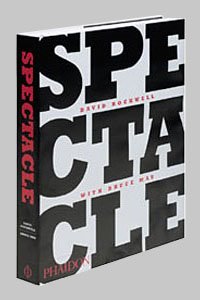
David Rockwell, an architect known as much for set design as for architecture and interiors, and whose work is self-described as a "quirky pluralism", has a new book.

Spectacle is "a visual essay documenting the notion and history of spectacle, those public performances and happenings that galvanize hordes of people and, if only for a brief moment, express the culture of our time in mass participation." Here's a taste. In its documentation of images influencing the author/architect it reminds me of John Pawson's popular book Minimum. Not coincidentially, both are published by Phaidon Press.

spectacle.jpg

To celebrate the publication of Rockwell's book, The Architectural League (with the Municipal Art Society�s Urban Center Books) is hosting a panel discussion on Wednesday, November 1 with David Rockwell and Bruce Mau, moderated by Chee Pearlman. It's at 6:30 p.m. at the Baruch Performing Arts Center, 55 Lexington Avenue.
 
Copyright 2010 Camera Dashboard. All rights reserved.
Themes by Ex Templates Blogger Templates l Home Recordings l Studio Rekaman