Showing posts with label KPIs. Show all posts

Monday, January 26, 2009

ReTweet Demystified

Last week I wrote a blog on Twitter Analytics. In this post I am going to talk about a ReTweet, a Twitter action and a KPI that I mentioned in my previous blog posts on Twitter.

ReTweet is when someone takes your tweet (a post on twitter) and tweets it again so that his/her followers can read it too. ReTweet is where the true power of a network like Twitter emerges.

For example if you have a network of 1000 followers then you are only reaching 1000 people. But if those 1000 (or subset of them) people take your message and ReTweet it so that it is broadcasted to their followers that�s when the message begins to extend beyond its original reach. If the message is compelling then it will be ReTweeted by your followers and their followers and their followers and it will go on.

ReTweet Best Practices

  • How to ReTweet

    You like a tweet and decide to send it your followers. You generally do it using RT, R/T, ReTweet followed by a blank space, the symbol @ and the username of the person who tweeted it and then the tweet. Keeping up with spirit of Twitter, RT has the least amount of characters and is the best way (in my opinion) and the most common way to retweet.

    Example:

    RT @anilbatra Working on a post on ReTweeting to continue my series of #twitter posts, http://cli.gs/6tgAUT. Anything that you would like me to cover? #wa
    (I know this is more than 140 characters but that�s the not the point).

    Here again is the format of ReTweet RT @username [tweet]


  • Proper ReTweet Attribution

    Since the real power of ReTweet is that it propogates the message byond direct followers so what is the right format of ReTweet when you get a message from JohnDoe that was a retweet of a message of JaneDoe? Should you ReTweet it as a message from JohnDoe or JaneDoe or both?

    The correct way to RT, in my opinion, is to always credit the original tweeter and if you still have room left to add more characters in your tweet then credit the person who sent you the tweet.

    Example:

    AnilBatra Tweets: Working on a post on ReTweeting to continue my series of #twitter posts, http://cli.gs/6tgAUT. Anything that you would like me to cover? #wa

    JohnSong takes this message and RTs: RT@anilbatra Working on a post on ReTweeting to continue my series of twitter posts, http://cli.gs/6tgAUT. Anything that you would like me to cover?

    Aaronlovelace gets this tweet from JohnSong, he should credit this tweet to anilbatra and if there is still space for more characters then he can RT with johnsong

    Aaronlovlace tweets: RT@anilbatra RT @johnsong Working on a post on ReTweeting to continue my series of twitter posts, http://cli.gs/6tgAUT. Anything that you would like me to cover?

    The main thing to keep in mind is to credit the original Tweeter first and then the person who passed the tweet to you.

    According to a tweet from @agray, you should not add the hashtag (#) again if you are not adding any new insight in the RT. (see the example above, where a hashtag was removed from both twitter and wa).


Why Should You ReTweet?

RT also help you in gaining new friends and followers.
ReTweeting helps you propagate a message to your followers that is relevant to them but might have missed since they don�t follower the original tweeter. They might rely on you as an expert in certain area and it becomes your obligation to your followers to keep them updated on the tweets in your area of expertise.
If you take someone�s message and RT then you are sending a message to that person that you are an ethical ReTweeters and genuinely following that person (and BTW: pay attention to my tweets and return the favor by ReTweeting my messages).

ReTweet as a Measure of Success

As I wrote in my previous blog post, ReTweet is one of the KPIs you should use to measure your Success on Twitter. ReTweets is a measure of how good your tweets are. If you send a message and nobody ReTweets then possibility is that the message was not compelling enough for people to ReTweet or you have followers who really are not paying attention to your tweets. As I said before the ReTweet propagates your message beyond your direct followers. This allows you to reach people who might not have otherwise followed you.

For ReTweets to work we all need to follow the ReTweeting best practices I outlined in this post.

Comments? Questions?

Other Related Sources:


----------------------------------------------------------------------------
Looking to fill your Web Analytics or Online Marketing position?Post your open jobs on Web Analytics Job Board
----------------------------------------------------------------------------
Site: AnilBatra.com
Twitter: http://twitter.com/anilbatra

Thursday, December 18, 2008

My View on Twitter


Twitter is a free social networking and micro-blogging service that allows its users to send and read other users' updates (otherwise known as tweets), which are text-based posts of up to 140 characters in length.

I heard about Twitter from few friends of mine who could not stop raving about it. After initial skepticism about how useful it would be, I joined the bandwagon and started twittering (Micro blogging on Twitter is called Twittering). I post about 1 tweet (post) per day on Twitter. There are some people who tweet all day long (I�m not sure if they do anything else).

From my experience so far I can tell you that it is a pretty good tool to learn things you normally would miss, things that you care about.

There are a number of people in the Web Analytics, Online Marketing and Advertising space that I follow and I�m always adding more people to follow. Following someone can provide you insight into what they are up to, what are the cool things they read or have come across, and what business challenges they are facing and trying to resolve. You can even learn how they solve these business issues.

Occasionally you will see people who tweet about their daily life. Their tweets looks like �I am sipping a cup of Starbucks mocha�, �I am walking into my apartment�, etc. But if you ignore such noise (unless you find it informative) you will find lots of useful information too.

Personally, here is how I have used Twitter so far:


  1. Find new articles/blog posts : There are so many articles published every day and it is hard to keep track of everything. However, people I follow on Twitter bring that information directly to me via their tweets

  2. Ideas for Blog Posts: Other people�s tweets have provided me with ideas for my own blog

  3. Get Answers: I have asked questions and have gotten answers from people who follow me on twitter

  4. Find new people to follow: I have found new thought leaders to follow, which in turn helps me with number 1 and 2


What does it mean to follow someone on Twitter?
Following: Following someone simply means receiving their Twitter updates.
Followers: Your followers are those who have elected to receive your tweets.


Someone mentioned awhile back about how to measure the success of your twittering. In his opinion the KPI for measuring the success of twittering is the number of followers/number of people you follow. The higher this number, the higher your success is on Twitter. What he was basically saying is that you should write great stuff so that people want to follow you but you should not follow anyone else because your KPI will drop. I don�t agree with this point of view, in my opinion, the KPIs for twittering success are :


  1. The increase in number of followers

  2. Number of Re-tweets/Tweet. Re-tweet is when someone takes your tweet and tweets it again so that his/her followers can read it too

  3. New things you learn (hard to quantify but you know when you learn something new)


Other KPIs could be


  1. Increase in your brand awareness (both personal and corporate)

  2. Increase in any site side conversion (you will be driving users to your site/blogs etc.)


Who should you follow?

It really depends on your interest. I started with few people in the web analytics field and my coworkers. Now, I also look at the original tweeters of the re-teewts that come my way and if the person meets my interests, I start following them. I also follow people who are following me if they tweet about the stuff that interests me.

If at any point you don�t like what a person is tweeting about then you can just stop following them, it take one click to stop following them.

Here are some Web Analytics and Online Marketers that you might start following:


I got this list from the Web Analytics Yahoo Group. Please let me know if I missed your name. If you would like your name to be added to this list then please leave your name and twitter username as a comment and I will update this list.

If you are already on Twitter I would like to hear your opinion about twitter. Do you think it has helped you personally or in business or is it a distraction?

----------------------------------------------------------------------------
Looking to fill your Web Analytics or Online Marketing position?
Post your open jobs on http://www.web-analytics-jobs.com/

Latest Position: Director, Analytics at Resource Interactive (Columbus, OH)
----------------------------------------------------------------------------
Site: AnilBatra.com
Twitter: http://www.twitter.com/anilbatra

Friday, September 12, 2008

Whereabouts

In early days of ZeroDash1, I started a tradition of sending out an email titled �Whereabouts� to let everybody else in the company know where we are going to be. With small size and flexibility to work from home, client site etc. made it difficult for people to know where others were and this email was a way for us to notify other team member about their whereabouts (it was our version of Twitter).

Well anyway, I have not written a blog post in pat 2 weeks so I think I owe you all an explanation of what happened and my whereabouts.

New addition to the family

We had a baby boy on September 3rd, his name is Neel. We were mostly busy with shopping for him before birth and then getting used his eating, sleeping and pooping patterns. Life has been hectic. At times it feel painful to get up in 2-4 times in the night when he starts crying, but as soon as we look at his innocent face all the pain goes away and he becomes our top priority. Finally I think (and people warn me that I am wrong) we have figured out his pattern and I will be back to my normal working schedule.

Internet Marketing Conference

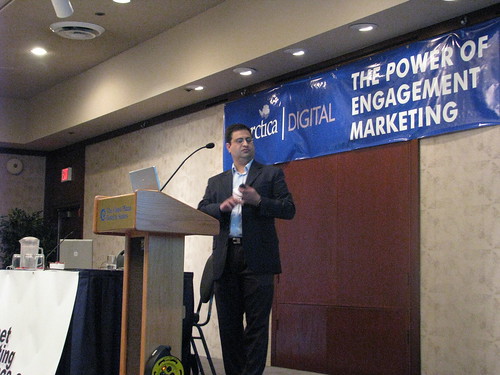
Yesterday I made a day trip to Vancouver, Canada to speak at Internet Marketing Conference. The topic of my session was �Monitoring Website Performance�. In this session, I discussed what Key Performance Indicators (KPIs) are, how they�re defined, what the difference between a KPI and a metric is (web analytics tool provide you lot of metrics, not all of them are KPIs), and how to effectively present KPIs.

You can read the recap of the presentation at
.


Source: http://www.flickr.com/photos/miss604/2848559853/

Thursday, February 7, 2008

Online KPIs � Back to Basics

Those who have been doing web analytics for a while know how important it is to define proper online Key Performance Indicators (KPIs). But believe me, there are a lot of marketers who are confused about online KPIs, difference between KPIs and metrics and how to define them. So I am going back to basics with this post.

What are KPIs

Web analytics tools collect a lot of data and provide a lot of metrics and reports. In fact most of the web analytics tool vendors proudly talk about number of reports that can be created in their tool. These reports, metrics and data might look interesting but we all know interesting is not necessarily important. KPIs, on the other hand, are the important metrics; the metrics that provide a view into the health of the business and are tied to the business goals. They allow business owners to focus on the things that are important to drive their business. Key Performance Indicators tell a business owner whether he or she is meeting their business goals or not. Good KPIs provide context and hence are usually represented as ratio, percentage, indexes etc and not as raw numbers. KPIs drive actions within an organization.

KPIs are specific to a business role. So, not all people in the organization have the same KPIs though all the KPIs should ultimately be tied to overall business goals. The CEO has a set of KPIs, a merchandising manager has a set of KPIs and a marketing manager has yet another set of KPIs. However, all of the respective executives (departments) need to be defined keeping overall business goals and CEO�s KPIs in mind.

Another way to understand KPIs is that they are the metrics that make people freak out when they go in the reverse direction from the expected and call for immediate actions.

Since so much is riding on the KPIs, it is very critical that you pay due attention in defining your KPIs. Understand what business goals are and then think about what activities and/or user behaviors relate to your business goals. Put together a list of all the metrics that will measure those activities and/or user behaviors. Weed out the unimportant metrics, figure out what are important metrics and what are critical few (and hence KPIs) that have an impact on the business goals. Note: For your analysis you will need to look at more than your KPIs to provide you a bigger picture. Remember, all KPIs are metrics but not all metrics are KPIs

Characteristics of KPIs

Dennis Dennis R. Mortensen lists following 7 KPI characteristics on his blog �Visual Revenue�
  1. a KPI echoes organizational goals

  2. a KPI is decided by management

  3. a KPI provides context

  4. KPI creates meaning on all organizational levels

  5. a KPI is based on legitimate data6. a KPI is easy to understand

  6. a KPI leads to action!


Those are all great characteristics of KPIs. I however differ a little on point number 2. In my opinion great KPIs are those that are agreed upon by those it directly impact and will be taking actions so they are not just handed down by the upper management. And as I said above they should all be tied to overall business goals.

How many KPIs should you have?

I don�t think there is any rule but in my experience you should limit it to no more than 6.

Reporting on KPIs

KPIs should be presented in an easy to consume dashboard. Web Analytics tools have built in dashboards but most of them are limited in terms of the functionality and flexibility. My recommendation is to present KPIs in a separate dashboard that not only shows KPIs but also trending and brief analysis. Without trending and analysis the KPIs might not provide a complete picture. Excel, PowerPoint or third party dashboard tools work the best for reporting the KPIs. Since they are outside the web analytics tool they also allow you to integrate other data sources, as needed.

Books on Web KPIs

Eric Peterson has a great book on the subject, called The Big Book of KPIs
 
Copyright 2010 Camera Dashboard. All rights reserved.
Themes by Ex Templates Blogger Templates l Home Recordings l Studio Rekaman